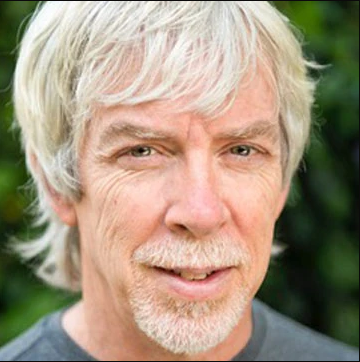
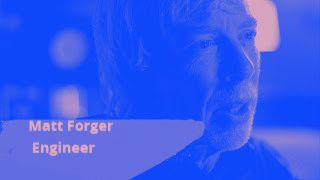
Watch
Matt Forger take us inside the studio in this exclusive sneak peak
from the
XSCAPE album documentary which is available only on XSCAPE Deluxe
Edition released in 2014
Read
Matt Forger article - studioexpresso Presents A Production Panel:
Mixing
With Masters at Hot Zone NAMM, Aneheim, 2013
studioexpresso interview with Matt Forger
Matt Forger at-a-glance: Michael Jackson (Thriller, Bad, Dangerous, HIStory...), Donna Summer, Paul McCartney,
Patti Austin, Missing Persons, Michael McDonald, James Ingram, Siedah
Garrett, Quincy Jones, Steven Spielberg, John Landis, George Lucas,
Francis Ford Coppola, Giorgio Moroder, Larry John McNally, George
Duke, Patrick O'Hearn, Gilberto Gil, Simon Lynge, Rod Temperton,
Bruce Swedien.
Matt Forger started in music by mixing live sound for rock bands
in the Northeast. Not satisfied with the functionality, quality
or cost of commercially available gear, he designed and built his
own. Through this he discovered another outlet for his creativity:
devising and building sound systems. "This not only made the
difference in how each band or artist was able to reach out to an
audience, it also led to my being able to move up to designing and
constructing studios." Moving
to Los Angeles, he joined the staff at Westlake Studios where he
worked with producers Giorgio Moroder, Keith Forsey, Harold Faltermeyer,
and George Duke. This was followed by the opportunity to work with
Quincy Jones, Rod Temperton, and Bruce Swedien, and become part
of "The A Team."
Michael Jackson
Forger's work with Michael Jackson began on Thriller and continued with
Bad, Dangerous, HIStory, and Blood on the Dancefloor. Matt also
worked on the E.T. Storybook Album with Quincy Jones and Steven
Spielberg producing. Following the remarkable success of the Thriller album, Matt worked on the groundbreaking Thriller video with director
John Landis. He then recorded and mixed the Captain EO Film and
then-revolutionary "4-D" attraction for Disney, produced
by George Lucas and directed by Francis Ford Coppola, and oversaw
its installation at Disney theme parks worldwide.
The nature of
Matt's involvement with Michael Jackson is wide-ranging. He not
only provided a technical foundation, but also a relaxed studio
environment in which the creativity of the artist could flourish
-- something that was crucial because of the way Michael would write
and develop songs and arrangements. "This process of experimentation,
exploration of sound, and application of new technologies is always
challenging, but can also be most rewarding," says Forger.
When it
came time to add bonus tracks and re-master the Michael Jackson
catalog, Matt got the call. He was heavily involved in the "Special
Edition" album versions of Off the Wall, Thriller, Bad and
Dangerous, as well as "The Ultimate Collection" 5-disk
boxed set.
Matt has also worked extensively with Japanese superstar Yuming. Already
a top-selling artist in Japan, with numerous hit albums, Yuming
and her producer, Masataka Matsutoya, were looking for a new sound.
Matt not only brought about a new sound, but new production techniques
as well. Their first collaboration doubled the sales figures of
any previous Yuming album, and was the first of 15 albums on which
Matt was recording engineer, mixer, and co-producer. Thirteen of
these albums entered the Billboard chart at #1. Matt has also received
2 "Gold Disc Awards" (Grammy Equivalent) for his work.
Indie Artists
The Los Angeles singer/songwriter community, with its many new and
promising artists, is an area of strong interest for Matt, where
he is a consultant for the creative recording arts. The basis for
his work is the emotional content of the recording. "Remembering
that music is a form of emotional communication is important"
Matt says, "Too many people view recording as a technical experience.
It is important to understand technology and be able to control
and it, but it's the music at center stage. It's the song people
remember, not the recording system." One
indie artist, Simon Lynge, actually held off recording his album,
"Beautiful Way To Drown," until he was able to put the
team together that made him comfortable. The team: Matt Forger and
Jon Mattox (The Young Dubliners) who joined with Simon to co-produce
his CD which was recently picked up by London's Lo-Max Records,
home of Australian legends The Go-Betweens (and front-man Robert
Forster's brilliant "The Evangelist"), New York rockers
The Wrens and British psychedelic pioneer Kevin Ayers.
Capturing the
Moment
Adept at recording many styles and genres, he enjoys recording in
a classic format with exciting new results. Matt calls it 'reality
recording,' a live to 2-track recording style that uses a carefully
placed single stereo microphone and a high quality signal path.
It is capturing the moment of a great performance, and putting the
listener there in the environment to share the experience. "It
is especially well suited to acoustic performances," Forger
states, "and it is elegant in its simplicity." Matt
is very familiar with what some people call "the process"
-- generating singles, videos, dance remixes, international versions
and promotional materials, approval of mastering and test pressings,
versions for film and television appearances, and cataloging and
maintaining an archive of all materials. These are just some of
the responsibilities that Matt has overseen.
Capturing Artist's
Unique Sound
Nowhere does the Matt Forger approach come into such clear focus
as in his work with Larry John McNally. Within the music business,
McNally is best known as the writer of songs for the Eagles, Rod
Stewart, Bonnie Raitt, Don Henley, Tina Turner, Chaka Khan, Joe
Cocker, Aaron Neville, Staples Singers, The Temptations, Jennifer
Warnes, and many others. What some listeners have also discovered
is that McNally is a recording artist with a dedication to exploring
multiple facets of rock, folk, blues, new age, and instrumental
compositions. "Working with Larry John on these recordings
has been both challenging and exciting," notes Matt, "and
it is fulfilling to work with an artist whose goal is to capture
a unique sound every single time he enters the studio."
Photo: by The C
It has been
pointed out that there is no "Matt Forger sound" because
his skill lies in letting the artist's true nature emerge through
the recording process. Therefore, artists can count on Matt to let
their vision burst forth without the coloration of extraneous points
of view. "I am here to bring out the greatness in you,"
he states.
Matt Forger
is frequently quoted in Man in the Music: The Creative Life
and Work of Michael Jacksonby Joseph Vogel, published by
Sterling Press.
l-r: Jolene Pellant (manager),
Mike Gormley (manager), Allison McGourty (Lo-Max Records), Simon
Lynge, Matt Forger (producer), Bernard McMahon (Lo- Max Records).
Forger consulted on the 2026 biopic, Michael starring Jaafar Jackson.
A holographic Michael
Jackson "performed" Slave to the Rhythm at the 2014 Billboard Music Awards. Jackson associates and choreographers the Talauega
brothers and Jamie King were brought in to direct
the video (produced by Pulse Evolution and Tricycle LogicSimon
Lynge). They held off recording of Beautiful Way To Drownuntil
the right team made him comfortable.
The team: Matt Forger and Jon Mattox (The Young Dubliners) who joined
with Simon to co-produce his CD which was picked up by
London's Lo-Max Records, home of Australian legends The Go-Betweens
(and front-man Robert Forster's brilliant "The Evangelist"),
New York rockers The Wrens and British psychedelic pioneer Kevin
Ayers. "The album features eight brand new recordings.
A Deluxe Edition of XSCAPE will include a selection of the recordings
in their original form.The
title of this album honors Michael's album naming process,"
says Matt Forger who takes us inside the studio in this exclusive
sneak peak from the
XSCAPE album documentary which is available only on XSCAPE Deluxe
Edition
Enjoy this Interview with Matt Forger from April 2026 issue of studioexpresso
.
SE: You, Bruce Swedien, Quincy Jones and Michael worked like a dream team on so many hit albums. Talk about the talent and studios for Thriller, Bad, and Dangerous.
MF: The first album we (Michael, Quincy, Bruce, Rod Temperton and myself) worked on together was Thriller. That was all done at Westlake Studios A & B. The drums for Beat It and The Lady In My Life played by Jeff Porcaro were recorded at Sunset Sound by Humberto Gatica. There were many long days and nights.After a tremendous effort to meet the deadline, we realized the quality wasn’t up to our high expectations and took another week to completely remix the album for final mastering.
SE: Were you working on other projects during Thriller?
MF: The E.T. Storybook Album with Steven Spielberg with an orchestra for the song Someone In The Dark by Rod Temperton was recorded at Ocean Way in what’s now East West Studios. It was recorded and mixed at Westlake and the timing of that work coincided with the completion of Thriller, creating a hectic work schedule.
SE: What came next?
MF: After a year of releasing singles from the Thriller album, Bruce, Michael and myself worked with director John Landis at Westlake to deconstruct the song Thriller and reconstruct it for the soundtrack to the Thriller video. Next we worked at Westlake with Bruce Swedien and Michael on his songs for The Jackson’s Victory album. State of Shock, the duet with Mick Jagger and Be Not Always his other contribution. After the Victory tour Michael wrote and produced the single Centipede for his sister Rebbie Jackson, his older sister. Then came the Disney/Lucas/Coppola collaborative park attraction, the 3D film Captain EO, both of which were my responsibility to record and mix.
SE: When did you start recording BAD and when did Bill Bottrell join the team?
MF: I started recording the songs for the Bad album at Westlake Studio A and then moved to Michael’s Hayvenhurst Studio as soon as remodeling there was completed. At this point, Michael was taking much greater control over the direction, style and production of his music and career. This was done with encouragement from Quincy, he wanted Michael to have his own identity. I worked with Michael and John Barnes, as did Bill Bottrell. We started work there over a year before Michael transitioned to working with Quincy and Bruce at Westlake Studio D, we were called the “B” Team. Quincy called his group at Westlake Studio D the “A” team and rightly so, Q and Bruce did an outstanding job of completing the Bad album.
SE: What came next? Was this when Bryan Loren and Teddy Riley joined the team at Record One?
MF: When the Bad Tour ended, I began working on songs at Westlake Studio C on what was then called the Decade project and was joined there by Bill Bottrell in Studio D. After 6 months the project moved to Record One and it became the Dangerous album with Bruce Swedien on board. We all continued working for two more years, at times with additional songwriter/ producers, briefly with Bryan Loren and later Teddy Riley, whose new jack swing grooves, especially inspired Michael. Teddy worked primarily at Larrabee with engineer Dave Way. After Michael’s Dangerous tour we were scheduled to begin a new album at Record One but on the very day we were scheduled to start, the Northridge earthquake struck. That forced the relocation of the project to The Hit Factory in New York City.
SE: I remember how the Northridge quake drove everyone to NY. You came back to LA to complete the HIStory album at Record One. Did you?
MF: Bruce, myself and a group of us worked in NY for about a year before moving back to LA to complete the HIStory album. Back at Record One we finished the album which then included some of the material (Earth Song and They Don’t Care About Us) that Bill and I had begun recording at Westlake years earlier.
SE: When did Brad Buxer join the team?
MF: Brad Buxer joined the team when we were at Westlake and the project was still considered Decade. He joined a few months after Bill and I had started and moved with us to Record One for the continuation of the Dangerous album. I worked with him on songs that Michael was writing. Brad was performing on keyboards, programing and helping Michael with arranging. That was another example of the teamwork we all shared. While on a hiatus a small crew of us including Buxer and engineer Mick Guzauski, traveled to Switzerland and met with Michael to work on material for the Blood on The Dance Floor album. After a couple of weeks at the Mountain Studio in Montreux we returned to Los Angeles to The Record Plant to complete that project.
SE: You've since done many reissue and compilation projects for Michael.
MF: Yes. I've been working with the Sony/Legacy label on many reissue and compilation projects. That work continued with the Estate after Michael’s untimely passing.
SE: Mention any other producers/writers or arrangers that you worked with during this time who have left an indelible impression on you?
MF: There were so many, Rod Temperton of course, Steve Porcaro, David Paich, Jerry Hey, Jeremy Lubbock, Tom Bahler, Greg Phillinganes, Paul McCartney, James Ingram, Siedah Garrett, Elmer Bernstein, David Foster, Brad Buxer, Bill Bottrell, Buz Kohan, Sidney Fine, John Barnes, Steve Lukather, Teddy Riley, Jimmy Jam, Rene Moore. I’m sure there are more but so many people contributed to Michael’s music over the years it’s hard to name them all.
SE: Now I understand you were consulted for the studio scenes in the the new biopic Michael and coached the actors in the studio scenes. Where was it shot and what was that like?
MF: Significant recording studio scenes for the 2026 Michael biopic were filmed at the iconic East West Studios and on the Sony Picture lot in Culver City. Filming also occurred at Jackson's former homes, including Hayvenhurst in Encino. The actor who plays my part in the studio scenes, David Pitcher, is a great guy and handsome, as well. I was honored to meet and be portrayed by him. I worked with the crew for the shoot, back in the room where we had recorded so much music. It was like a flashback to an earlier era and a happier time. I appreciate the effort of everyone involved to tell the story of Michael’s recording with as much accuracy as could be expected. It was a different time with different technology, but the music is the same.
SE: Did the consulting work take place in person or remotely?
MF: I worked on location with the crew, set designers, property department, wardrobe department, music supervisor, audio department and director. I was involved with the scenes shot in studio settings at different points in time in Michael’s career: Young Michael at Motown, Quincy producing Michael, first on the Off The Wall album, then later on the Thriller album and recording at the Hayvenhurst home studio as well.
SE: What have you learned from the experience of working with an icon like MJJ?
MF: I’ve been privileged and honored to be part of Michael's production team on so many of his recordings. I’ve always viewed my role as being a facilitator to the creative effort. The creative intent always leads and the process follows. What’s important is the music, and the song. The role of technology is to support the artist. For me it was first understanding Michael’s vision, how he wanted the music to feel, the emotional statement he was creating or the message he was delivering. Whether it was Quincy or Michael or Bruce I was there to ensure everything worked to that end. Of course it’s about technical stuff, but more importantly it’s about the thing that resonates with the listener. As the saying goes, “You will forget what was said to you, but you will never forget how it made you feel.” That was Michael’s great talent, you felt something when you listened to his music. He allowed it to be a personal experience that affected you at some point within your being. Not everyone experiences music the same way. Not all music does this to every person, but when the right moment happens, you know it. I believe this is why his music has such tremendous appeal. Like an international language, his music connects to people around the globe.
SE: What other books and/or films on Michael have you contributed to?
MF: Documentaries: BAD 25 by Spike Lee, Thriller 40 Documentary by Nelson George, Sonic Fantasy by Marcos Cabotá Books: Man in the Music: The Creative Life and Work of Michael Jackson Joseph Vogel, Xscape Origins by Damien Shields, The Genius Of Michael Jackson by Steve Knopper, Dangerous, from Mark Ryden to Michael Jackson by Isabelle Petitjean, Michael Jackson, Voice Upon A Time by Isabelle Petitjean, From Thriller To Bad by Brice Najar, On The Dance Floor by Brice Najar, Let’s Make History by Brice Najar, Michael Jackson, All The Songs by Richard Lecocq and Francois Allard, and Michael Jackson- Legend, by Richard Lecocq.
SE: What would you like to say to your team mates Michael, Quincy, and Bruce who are no longer with us?
MF: My sincerest thanks and gratitude for allowing me to be part of a remarkable achievement. As we worked on the albums we never had any idea that our work would become part of recorded history, transcend popularity and define a generation, or set new commercial benchmarks. But in reflection the work was such a team effort, such a meeting of the minds and sharing of the responsibilities I'm not surprised that it succeeded. Quincy was known for the phrase, “You leave your ego at the door.” We put that motto to good use. We were a bunch of friends to do the best we could. That was the attitude in the room. Many of the people on the team who worked with Quincy would say, “I attended the University of Quincy Jones.” It was a real pleasure to work with this group, all of them masters at their crafts. For me one of the most significant part was the vibe in the room. Everyone was respected and appreciated for there contributions. No attitude other than, “we’re here to have a good time and in the process serve the songs and the artist.” There would be laughs and jokes, but the music was always serious business, that's for sure. I believe this attitude comes through when you listen to the recordings. The personality, the emotion, it’s all there for you to enjoy. And if one song is not your style. No problem, maybe the next track will be the one that makes you move, dance and feel good.